Have you ever wondered what insolvency in business truly means and how it impacts companies? For many business owners, facing insolvency is a daunting challenge where the company's assets are insufficient to meet its debt obligations on time. In such situations, understanding your options is crucial—and at Nexus Corporate Solutions, we help businesses navigate the complexities of insolvency and explore the most suitable paths to recovery.
Insolvency can lead to severe consequences for any business.
Insolvency doesn't happen overnight. It results from several factors, such as poor cash flow management or significant debt levels. Our article provides clear insights into recognising signs of insolvency and understanding the difference between insolvency and bankruptcy.
Our guide will offer practical advice on dealing with insolvency. Read on to learn more about overcoming these challenges.
What Does Insolvency Mean for a Business?
Insolvency in business occurs when a firm cannot meet its debts as they fall due. This situation means the company cannot pay its creditors, leading to significant financial and operational challenges for the limited company.
The process flags a liquidity crisis, showing that the business's cash flow is inadequate for covering immediate liabilities. Insolvency marks a critical point where limited company directors must consider formal company insolvency procedures or find alternative strategies to rescue the business.
The difference between being temporarily short of cash and being insolvent is crucial for limited company directors to understand.
Factors like poor cash management, reduced demand for products or services, and high levels of debt often contribute to company insolvency. When a business is insolvent, it may need an insolvency practitioner's help to navigate through options like company voluntary arrangements (CVA), administration, or even limited company liquidation.
Making timely decisions can prevent compulsory liquidation ordered by the court and potentially save the limited company from closure.
How Does Insolvency Occur?
Insolvency happens when a business cannot meet its financial obligations as they fall due. This situation arises from poor cash flow management or mounting debts that exceed the company's current assets.
Companies often face difficulties in generating enough revenue to cover operational costs, leading to cash flow insolvency. When expenses outpace income consistently, the risk of becoming insolvent increases.
Several factors contribute to this issue, including declining sales, high fixed costs, and unexpected financial losses. A significant drop in market demand for a company's products or services can also trigger insolvency.
If a business fails to adjust its spending in response to lower income levels, it may quickly find itself unable to pay its creditors on time. This inability to pay debts often marks the start of company insolvency proceedings unless the company finds a way to resolve its financial distress promptly.
What Are the Signs of Insolvency?
Understanding the process of insolvency is essential for entrepreneurs. Recognising the early indications can prevent a firm from approaching destruction.
Continuous issues with cash flow represent the first warning sign. If your enterprise regularly encounters trouble in settling bills promptly, it might be on the verge of cash flow insolvency.
Legal interventions from creditors provide another transparent sign that a firm may enter insolvency. Witnessing court orders or legal consequences for unpaid liabilities demonstrates that creditors have lost confidence in the company's ability to meet its obligations.
Challenges in settling taxes, particularly repeated postponements in payments to HM Revenue and Customs, suggest critical financial wellness concerns. HMRC takes a particularly firm stance on unpaid taxes and can quickly escalate matters through the courts.
Outstanding dues to suppliers frequently indicate that a business is not meeting payment timescales, which may cause suppliers to discontinue their service, hinting at potential insolvency.
Escalating degrees of liability, particularly if the costs of managing debt surpass incoming income, foreshadow trouble. When interest payments and debt servicing costs consume an increasing proportion of revenue, the business model becomes unsustainable.
Swift reduction in sales or income within a brief period without recovery can result in insolvency. Market downturns, loss of key customers, or competitive pressures can rapidly erode a company's financial position.

Dependence on overdrafts or loans for everyday operations indicates foundational problems. When a business relies heavily on external financing to meet basic operational expenses, this suggests structural financial weaknesses.
Alterations in credit circumstances with suppliers often occur when suppliers demand tighter credit conditions or advance payments due to doubts about your company's solvency.
Struggles in raising fresh funds or refinancing existing debts hint at diminished faith in the market for your business. When banks, investors, or lenders become reluctant to provide additional funding, this indicates serious concerns about viability.
Problems retaining staff due to the incapacity to disburse salaries on schedule can result in staff departures, subsequently unsettling the firm further.
Recognising these cautionary signs early gives enterprises a superior opportunity at reorganisation before encountering dissolution or other serious consequences.
Difference Between Insolvency and Bankruptcy
Understanding the signs of insolvency is critical, but it's equally important to grasp the difference between insolvency and bankruptcy. Insolvency marks a state where a limited company cannot pay its debts on time.
It refers to a financial condition indicating that liabilities exceed assets or there's insufficient cash flow to meet immediate obligations. Bankruptcy, on the other hand, is a legal process initiated when an insolvent company or individual cannot meet their debt obligations.
While insolvency highlights financial distress, filing for bankruptcy offers a path for restructuring debts or liquidating assets under legal supervision.
Bankruptcy proceedings aim to provide fair distribution of non-exempt assets among creditors. During this phase, an insolvency practitioner plays a vital role in managing the process effectively, ensuring both the insolvent company and its creditors navigate through these challenging times with clarity and control.
Whether opting for voluntary liquidation as part of dealing with balance sheet issues or facing compulsory liquidation by creditor's demand, understanding these differences helps directors decide the best course of action for their struggling business.
How Can a Company Become Insolvent?
A company reaches a state of insolvency when it is incapable of fulfilling its financial obligations as they become due. This typically occurs due to a number of contributing factors. For example, poor cash flow management is a leading cause.
Companies may find themselves unable to meet daily expenses or pay off the debts owed, highlighting a significant issue with cash flow. Moreover, if their balance sheet shows that liabilities outweigh assets, this is a clear sign of impending difficulties.
External circumstances also have a significant impact on pushing companies into insolvency. Economic downturns lead to a decrease in demand for products and services, thus reducing a company's income.
Sudden incidents like the loss of a key client or facing a lawsuit can also disrupt finances. It is vital for directors to be alert to these potential risks and plan accordingly to avoid the limited company becoming insolvent.
Common Causes of Insolvency
Understanding the prevalent causes of company insolvency is essential for entrepreneurs, corporate directors, and finance experts. It aids in preventing fiscal complications and guarantees sustained prosperity.
Inadequate management of cash flow represents one of the most significant factors leading to business failure. Organisations frequently confront insolvency when they fail to maintain a constant positive cash flow. This situation arises if outgoings exceed earnings, resulting in an absence of finances to meet immediate expenditures.
Overwhelming debt burdens businesses with hefty obligations that may become difficult to fulfil through normal trading activities. Companies facing insolvency often struggle with debt repayment commitments where interest payments become uncontrollable, forcing them into financial distress.
Diminished demand for goods or services can drastically impair turnover and profitability. Organisations unable to adapt swiftly to changing market conditions may risk becoming insolvent as customer preferences shift or economic conditions deteriorate.
Ineffective business planning, including resistance to adapting to market alterations or persisting with an obsolete business model, can usher organisations into financial strife.
Legal hurdles, including litigation or regulatory conflicts, can drain resources and divert attention from routine operations, potentially causing insolvency.
Loss of vital customers or contracts poses particular risks for businesses with concentrated customer bases. Overdependence on a handful of clients can prove hazardous, as losing one or more significant customers could destabilise a company's entire financial structure.
Economic downturns affect widespread commercial activity, with recessions significantly reducing consumer expenditure and corporate investment. These broader economic factors make it challenging for companies to remain solvent.
Neglecting to invest in innovation and development can compromise competitive advantage, leading to dwindling sales and profitability.
Unexpected disasters, whether natural calamities or operational mishaps that interrupt business activities, can have immediate and severe impacts on a corporation's capacity to generate revenue.
Poor strategic management of limited company assets, including deficient asset utilisation or failing to employ resources effectively, may lead to decreased productivity and fiscal deficits over time.
Escalating operational costs without proportional increases in revenue erode profit margins, nudging companies nearer to insolvency if not supervised correctly.

The Role of Cash Flow in Insolvency
Transitioning from usual reasons for insolvency, it becomes evident that cash flow holds a key position in this circumstance. A business might face difficulties if the incoming finances do not offset the outgoing expenses.
Often, this predicament is termed cash flow insolvency. It occurs when a firm cannot settle its debts promptly due to limited resources in its accounts.
Efficient handling of cash flow is vital for companies to sidestep insolvency. Directors require consistent monitoring of their fiscal reports, tracking revenue and expenses carefully.
They should ensure that their firm maintains ample liquidity to fulfil obligations when due. Neglecting this responsibility can guide the business on a route towards becoming insolvent, risking liquidation and loss of control over the future of the limited company.
Impact of Balance Sheet on Insolvency
A company's balance sheet plays a crucial role in determining its solvency. It lists all the company's assets, liabilities, and equity at a specific point in time. A healthy balance sheet shows more assets than liabilities, indicating that the business can cover its debts and is solvent.
On the other hand, balance sheet insolvency occurs when liabilities exceed assets. This situation signals financial distress because the company lacks sufficient resources to meet its obligations.
Balance sheet insolvency reveals a critical need for action to avoid legal complications.
Directors must regularly review their company's balance sheet to spot early warning signs of trouble. Timely recognition allows them to seek advice from licensed insolvency practitioners or consider restructuring options such as debt consolidation or repayment plans before it becomes too late.
Acting quickly can save a business from facing administration or liquidation, preserving jobs and shareholder value.
What Happens When a Company is Insolvent?
When a company becomes insolvent, it means it cannot pay its debts when they fall due. The insolvency process starts to protect the business, its creditors, and employees. First, directors must cease trading immediately to avoid worsening the situation.
They should not take action on new contracts or orders either.
Next, a licensed insolvency practitioner takes control of the company's affairs. This person works out if the limited company can be saved through restructuring or if liquidation is the only option.
Liquidating an insolvent company involves selling its assets to pay off debts. During this time, directors of the insolvent company will have strict legal responsibilities they must follow to avoid personal liability.
Steps in the Insolvency Process
Understanding the steps in the insolvency process is crucial for any business facing financial difficulties. This guide outlines the key stages you must navigate if your company cannot pay its debts.
The first essential step involves consulting a licensed insolvency practitioner. Before making any decisions, seeking advice from a professional helps assess your situation accurately and understand the available options.
Next, you must analyse your company's financial situation thoroughly. Review all assets, liabilities, and cash flows to determine if the business is genuinely insolvent and whether recovery remains possible.
Following this analysis, hold a board meeting with directors to discuss the financial assessment and consider options for recovery or formal insolvency proceedings.
If continuing operations will only increase debt levels, it may be wise to cease trading immediately. This decision requires careful consideration as wrongful trading can result in personal liability for directors.
Choose an appropriate insolvency procedure based on the company's circumstances. Options include administration, liquidation, or a company voluntary arrangement (CVA), each with different implications for the business and its stakeholders.
File the necessary documentation at Companies House if proceeding with formal insolvency procedures. This typically involves appointing an insolvency practitioner and notifying the relevant authorities.
Notify creditors about the situation as required by law. Creditors must be informed of the company's inability to meet its obligations and the proposed course of action.
Work closely with the appointed insolvency practitioner during proceedings. They manage everything from asset realisation to creditor communications and ensure compliance with legal requirements.
Cooperate fully in investigations into the company's conduct before insolvency was declared to ensure compliance with insolvency law.
Finally, insolvency practitioners submit reports to Companies House and potentially to the Insolvency Service regarding directors' conduct, which may affect future directorship eligibility.
Following these steps under professional guidance ensures that directors fulfil their legal responsibilities and maximise returns for creditors during difficult times.
Responsibilities of a Company Director During Insolvency
Directors of insolvent companies must act immediately to reduce potential financial loss and protect creditor interests. Their responsibilities shift fundamentally in favour of creditors once insolvency becomes apparent. This requires halting any business activities that could amplify debt levels or prejudice creditor positions.
Directors need to evaluate their company's financial state accurately, consulting a licensed insolvency practitioner when necessary. It becomes vital they do not make payments or sell assets in a way that unjustly favours one creditor over others.
A director's function includes ensuring all legal and financial obligations are fulfilled during insolvency proceedings. They must also compile precise records for insolvency practitioners, outlining assets and liabilities explicitly.
Failure to adhere to these responsibilities can lead to legal actions against directors personally, including disqualification from holding future directorships or facing personal liability for limited company debts through wrongful trading provisions.
Collaborating with a knowledgeable insolvency practitioner can help navigate this process effectively, offering the most favourable outcome for all parties involved whilst protecting directors from potential personal liability.
Different Types of Insolvency in Business
Businesses confront cash flow insolvency when they cannot make timely debt payments, even though they may possess assets that could cover total debts if realised. This usually occurs when assets cannot be efficiently converted into cash without losing significant value.
Balance sheet insolvency arises when a company's liabilities outstrip its assets in financial accounting terms, signifying the business cannot fulfil long-term commitments. This leads to deeper financial difficulties that necessitate structural change or expert advice from an insolvency practitioner.
Voluntary liquidation represents another path companies may choose, permitting them to terminate operations voluntarily before creditors force them into compulsory liquidation, providing some control over the conclusion of the company's affairs.
Exploring Balance Sheet Insolvency
Balance sheet insolvency happens when a company's liabilities exceed its assets. This means the business owes more than it owns or can sell for cash. Directors must regularly check their balance sheets to spot this early.
If a company is insolvent on a balance sheet basis, it might not immediately cease trading. The directors could look for ways to turn things around, such as restructuring debt or finding new investments.
Recognising this type of insolvency early helps companies act before debts become unmanageable. Directors facing balance sheet insolvency should consult with licensed insolvency practitioners.
These experts assist in evaluating the financial position and assessing options like administration or voluntary liquidation to protect the business and its stakeholders' interests.
What Is Voluntary Liquidation?
Moving from balance sheet insolvency, we come to voluntary liquidation. This process involves the legal closing of a company that is insolvent. Directors choose this option to wind up their business's affairs in an orderly manner.
They must believe the company cannot continue due to its outstanding debts.
In a voluntary liquidation, directors work with a licensed insolvency practitioner. This expert helps place the company into creditors' voluntary liquidation, after consultation with shareholders. It represents a step taken by those who wish for business rescue or when they see no other option for recovery.
The objective here is clear: to pay off the company's debts as much as possible and then dissolve the company responsibly.
Do You Need an Insolvency Practitioner for Your Company?
Choosing to employ a licensed insolvency practitioner becomes vital if your company is incapable of meeting its financial obligations. This circumstance signifies your business is confronted with insolvency, which necessitates professional assistance.
These practitioners are instrumental in guiding firms through the intricate steps of restructuring or liquidation. They provide insightful suggestions for the most favourable progress and strive to limit legal liabilities for directors.
When insolvency signals appear, such as constant cash flow issues or a balance sheet signifying more liabilities than assets, early assistance can bring about a substantial improvement.
Insolvency practitioners support businesses in comprehending their monetary condition, examining all possibilities that include administration and voluntary liquidation, and guaranteeing compliance with legal responsibilities to creditors and shareholders.
A consultation validates if your company is solvent or if it requires measures to safeguard itself and stakeholders from further financial harm.
When to Seek Help from Licensed Insolvency Practitioners
Recognising the appropriate time to seek guidance from licensed insolvency practitioners is essential for any business proprietor. This proactive measure can prevent your company from deteriorating further and provide an opportunity for renewal.
Your company routinely struggles to fulfil financial obligations. If you identify that your business cannot settle its invoices when they fall due, it becomes the right moment to consult an insolvency practitioner.
Creditors initiate legal proceedings against your business. When creditors send formal demands or instigate legal processes, it becomes essential to pursue professional assistance.
Directors are worried about personal liability. The apprehension of personal guarantees being utilised suggests the necessity for expert counsel on financial liability limitations.
Cash flow issues endure despite attempts to rectify them. Continuous cash flow struggles may indicate deeper insolvency issues, calling for intervention by a specialist.
Your company's balance sheet records more liabilities than assets. This condition, termed balance sheet insolvency, calls for guidance from an insolvency practitioner.
You are pondering voluntary liquidation of an insolvent company as a possibility. This judgement should be taken following consultation with an expert who understands corporate finance nuances.
Employees' salaries and other statutory payments are overdue, indicating an immediate requirement for a restructuring strategy suggested by an insolvency practice.
Tax liabilities grow without a distinct repayment strategy to HM Revenue and Customs. This situation proves risky and needs urgent consideration as HMRC possesses extensive powers to recover unpaid taxes.
Suppliers restrict credit terms or insist on cash on delivery, signalling they deem your business a credit risk.
Consumer complaints amplify due to delivery or service delays induced by financial constraints in your company.
Heeding these indicators earnestly and responding promptly can empower a business to persevere through challenging periods with the assistance of a licensed insolvency practitioner.
Choosing the Right Insolvency Procedure for Your Company
Choosing the right insolvency procedure for your company calls for a comprehensive understanding of the company's financial position and circumstances. A licensed insolvency practitioner can provide essential advice on opting for voluntary liquidation, administration, or a company voluntary arrangement fitting your specific situation.
Each choice presents different implications and established procedures designed to support a business grappling with insolvency. The decision is influenced by several factors, such as the company's cash flow position, asset values, and future trading prospects.
Licensed insolvency practitioners contribute significantly to this selection process. They analyse your company's financial condition to propose a suitable plan. This evaluation might result in debt restructuring to boost cash flow or asset liquidation to settle outstanding creditor claims.
Their expertise ensures that directors fulfil their legal responsibilities towards creditors, potentially preserving the business from further deterioration.
Conclusion
Facing the reality of insolvency can be a challenging time for any business owner, company director, or financial professional. The key is to act swiftly and seek guidance from a licensed insolvency practitioner.
These experts can help your company navigate through difficult waters, offering invaluable advice on whether voluntary liquidation makes sense or if there remains a way for the business to continue trading.
Consulting with a licensed insolvency practitioner early could save your business from further decline by exploring all available options. They bring clarity to complex situations like cash flow problems that lead to insolvency.
Making informed decisions at this critical juncture will determine if your company can weather this storm or if it becomes time to close operations responsibly, safeguarding everyone's interests involved.
Facing insolvency is a challenging moment for any company. When a company can't pay its debts, it may have to go into liquidation. This raises many questions about what happens next.
One key question we commonly receive is, "What happens when a company goes into insolvency?" In this blog, we'll explore the process of limited company liquidation and offer insights into how businesses navigate this difficult period.
We'll break down the steps involved in liquidating a company, from the initial assessment to the final stages of distributing assets. We aim to provide clear and straightforward advice to business owners, directors, and financial professionals dealing with an insolvent company.
Stay tuned for practical tips on handling insolvency with care and professionalism.
What Does It Mean When a Company Goes Insolvent?
Transitioning from the introductory part, we explore what insolvency actually means for businesses. Insolvency occurs when a limited company is unable to fulfil its financial obligations as they come due.
This predicament suggests that the organisation doesn't have enough assets to take care of its liabilities. In such circumstances, directors should contemplate formal procedures for liquidation or pursue advice related to insolvency to evade wrongful trading. Companies must act promptly to address their financial challenges to avoid further complications or legal repercussions.
Indicators of a limited company progressing towards financial distress include ongoing issues with cash flow and unsuccessful attempts by creditors to obtain payment. If these complications persist without a solution, insolvent liquidation becomes an unavoidable outcome.
During this phase, it's pivotal to engage with a licensed insolvency practitioner to efficiently handle the compulsory or voluntary liquidation process, ensuring adherence to legal requirements and looking for potential avenues of recovery for the business.
Understanding Insolvency and Its Implications
Insolvency impacts a company when it is unable to fulfil its financial obligations on time. It denotes the company's incapacity to settle debts, instigating a formal insolvency procedure.
This condition may urge directors to contemplate alternatives such as Creditors' Voluntary Liquidation or secure insolvency advice from certified specialists. The repercussions of insolvency are significant, influencing not just the solvency status but could also potentially signal the company's cessation through liquidation.
The effects go beyond the immediate circle of proprietors and shareholders. Creditors, personnel, and clients confront uncertainty and potential losses. An insolvent company status necessitates careful handling through legal resources such as compulsory liquidation or participating in a Company Voluntary Arrangement if viable, all directed by a designated licensed insolvency practitioner who supervises the process of winding down or debt restructuring in an attempt to save the business when feasible.
Signs That a Company Is Insolvent
Recognising the early hints of insolvency can protect a company from exacerbating financial harm. Directors and finance experts must remain alert for these cautionary indications:
Ongoing losses: The company logs losses consecutively, exhausting its reserves.
Cash flow complications: The regular delay in creditor payments points to a lack of funds.
Legal interventions: Creditors initiating legal proceedings for debt retrieval underlines severe financial hardship.
Late taxes: The company finds it challenging to fulfil tax obligations punctually, accruing debt with HM Revenue and Customs.
Excessive financing: The company's debt magnitude, in comparison to its equity, complicates the acquisition of new funding.
Unhealthy liquidity ratio: The immediate availability of cash is restricted, suggesting an unfavourable liquidity position.
Falling sales: A steady decline in sales revenue indicates eroding market trust or competitiveness.
Loan delinquencies: The company's inability to comply with loan repayment agreements leads to violated lender contracts.
Supplier difficulties: Suppliers insisting on cash upon delivery due to doubts about the company's payment capacity disrupt the supply chain.
Creditor urgency: Rising creditor demands and warnings of winding-up petitions imply escalating worries about the company's solvency.
Every one of these signs is a red flag for a business's financial condition and commands prompt focus from its directors and financial consultants. Timely identification of these markers is pivotal for initiating measures for a plausible plan or a restructuring initiative before liquidation becomes inescapable.

Consequences of Company Insolvency
Company insolvency activates a sequence of legal and financial aftereffects that impact all parties involved. Once a company falls into insolvency, it must cease operations immediately to avert further debt.
Creditors may commence legal proceedings to recoup funds owed by the company, leading to court rulings or winding-up petitions against the insolvent entity. This phase eventually ends in formal liquidation proceedings where the company is formally dissolved.
The directors of an insolvent company endure significant examination. They're probed for their involvement in the firm's decline and could be held personally liable if found responsible for wrongful trading.
Company possessions are sold to repay creditors, but unsecured creditors regularly only receive a small portion of what they are owed, if anything at all. Employees are left without jobs, with minimal chances of recovering unpaid wages through the National Insurance fund.
Managing insolvency is intricate, and outcomes differ substantially depending on each case's specifics.
Steps a Company Takes When Going Into Liquidation
Liquidating a company is a severe step for any business facing financial trouble. It involves several essential procedures to ensure everything is handled correctly and legally binding.
Directors must first assess whether the company is solvent or insolvent. This determines the type of liquidation process required.
A formal decision to liquidate the company follows, usually requiring a vote by the company's shareholders.
An insolvency practitioner is appointed to oversee the liquidation process. This expert helps manage the company's affairs during this period.
The chosen insolvency practitioner will then notify Companies House that the company is going into liquidation.
All trading activities cease immediately, and employees are laid off in accordance with employment law.
The company's assets are identified and valued before being sold off to repay creditors as much as possible.
Creditors are notified about the liquidation and are invited to submit claims for what they're owed.
Secured creditors are paid first, followed by unsecured creditors if funds allow.
Any remaining funds after creditor repayment may be distributed among shareholders.
Once all assets have been dealt with and debts paid as much as possible, a final meeting with creditors occurs.
The insolvency practitioner submits a final report to Companies House, leading to the dissolution of the company from the register at Companies House.
This process ensures that all legal obligations are fulfilled and provides a structured approach to ending a business's operations when it can no longer meet its financial obligations.
The Initial Assessment: Is the Company Solvent?
The initial step in the liquidation process involves assessing if the company is solvent or insolvent. Directors of the company must closely examine the financial state to decide on this crucial aspect.
They check if the company can meet its debts when they fall due. If it cannot, it may have to enter into liquidation.
Licensed insolvency practitioners often guide companies through this assessment phase. They look at assets, liabilities, and cash flow statements. This helps them understand whether a company stands a chance to rescue its operations or if formal liquidation is inevitable.
Their expertise ensures that directors make informed decisions about their next steps in either winding down the company or exploring business rescue options.
Choosing the Right Liquidation Process
Identifying the appropriate liquidation process is crucial for a company in financial trouble. Directors must choose between Creditors' Voluntary Liquidation, Members' Voluntary Liquidation, or compulsory liquidation.
Each option has specific requirements and outcomes. In Creditors' Voluntary Liquidation, directors may conclude the business cannot repay its debts and opt to wind up affairs with creditor input.
Members' Voluntary Liquidation suits solvent companies wishing to close down efficiently, distributing assets among shareholders after clearing debts.
Compulsory liquidation occurs when a court forces a company into this route due to unpaid debts following a creditor's application. Making an informed choice depends on whether the company is solvent or insolvent and aims for closure or debt resolution.
Choosing the right path ensures minimal disruption and maximises returns for stakeholders.

Role of an Insolvency Practitioner
An appointed insolvency practitioner steps in to manage the company's affairs once it faces financial distress. This licensed professional takes control of the company during liquidation or bankruptcy proceedings.
Their main task is to liquidate assets fairly and pay off creditors, following rules set by the Insolvency Act 1986. They work closely with all involved parties, including company directors and creditors, ensuring transparency throughout the process.
They also explore ways to rescue the company, if possible, through arrangements like Creditors' Voluntary Liquidation or Members' Voluntary Liquidation. Acting as an intermediary between the debtor company and its creditors, insolvency practitioners aim to find balanced solutions that serve both sides' interests.
The end goal is always either saving the business or ensuring its smooth closure while minimising losses for those owed money.
What Happens During Company Liquidation?
As a business undergoes insolvency, an orderly process takes place in which the assets of the firm are liquidated. This process is overseen by a certified insolvency practitioner. They are responsible for ensuring all business assets, from office equipment to intellectual property, are auctioned at the most optimal price.
The revenue generated from these transactions is then used to repay the company's liabilities.
Following the asset sale, creditors are repaid in a specific sequence. Secured creditors are given priority, and then comes the turn of unsecured creditors, such as vendors and credit card corporations.
If there are remaining funds after repaying these debts, they are shared amongst shareholders. This act signifies the termination of a company and initiates its dissolution. The subsequent step is to comprehend voluntary liquidation possibilities for companies considering this option before encountering financial challenges.
Overview of the Liquidation Process
The liquidation process starts when a company can no longer meet its financial obligations and decides it must close down. Directors or creditors initiate this formal liquidation process, leading to the eventual dissolution of the business.
A licensed insolvency practitioner takes charge of assessing the company's assets and liabilities. They then proceed to liquidate assets, meaning they sell off what the company owns to pay back those it owes money.
Assets are sold for cash, which is used to settle debts with creditors in a strict winding-up order defined by law. Secured creditors get priority, followed by unsecured creditors if funds allow.
After paying off debts as much as possible, any remaining proceeds are distributed among shareholders if anything is left. The final step sees the company struck off from the Companies House register, officially ending its existence.
Liquidating a company marks a significant turning point; it's about clearing outstanding obligations before closing doors permanently.
How Assets Are Sold and Distributed
Transitioning from a broad understanding of the liquidation procedure, we now concentrate on the procedures of asset sale and distribution during a company's liquidation. The insolvency practitioner has a crucial role here.
They have the responsibility to promptly recognise and evaluate all of the company's assets. This includes tangible items such as office furniture and inventory, along with intangible ones like trademarks or patents.
After valuation, these assets are sold to repay the creditors. The sale may occur via auctions or private sales, with the objective to optimise returns. Proceeds from sales firstly cover the expenses of the liquidation process itself.
Following this, secured creditors are repaid according to legal priority norms. If there are remaining funds, they are divided among unsecured creditors in a balanced manner. Be aware that not all shareholders will receive returns; it largely hinges on the residual amount after all debts are settled. This process often occurs in cases of cash flow insolvency, where the company cannot meet its obligations as they fall due, highlighting the importance of swift and organised asset management to mitigate losses.
Understanding Voluntary Liquidation Options
Voluntary liquidation comes into play when a company decides to wind up its affairs while it can still pay its debts. This process allows the directors to control the closure of their business responsibly.
Among these options is Members' Voluntary Liquidation (MVL), which occurs when shareholders agree that winding up the company serves their best interest, typically because the directors want to retire or pursue new ventures.
An MVL ensures that assets are distributed fairly among shareholders after paying all creditors.
Another route is Creditors' Voluntary Liquidation (CVL). It happens if a company faces financial difficulties and cannot meet its liabilities but chooses to liquidate before being forced into compulsory liquidation by creditors.
A CVL provides an orderly means for dealing with debt and may offer directors and shareholders some relief from potential personal liability issues arising from insolvency. Both processes require appointing an insolvency practitioner to oversee asset distribution and ensure legal compliance throughout the company's dissolution.

Company Voluntary Arrangement Explained
A Company Voluntary Arrangement (CVA) allows a company facing financial troubles to pay off its debts over an agreed period. The directors of the company propose this arrangement, needing approval from 75% (by debt value) of creditors.
It's designed to let the business continue operating while repaying creditors at more manageable levels. A CVA can include renegotiating terms with creditors, such as paying smaller amounts or delaying payments.
CVAs offer a lifeline for businesses under pressure, providing a structured path to recovery.
This procedure keeps the company trading and avoids liquidation. Moreover, it requires careful planning and agreement from all involved parties to succeed. A licensed insolvency practitioner plays a crucial role in setting up and supervising the arrangement, ensuring that both the company's and creditors' interests are fairly represented and protected during this process.
Exploring Creditors Voluntary Liquidation
Creditors' Voluntary Liquidation (CVL) plays a crucial role when a company cannot meet its financial obligations. In this process, directors decide to liquidate the company's assets voluntarily to pay off debts.
The aim is to bring an orderly end to the business's affairs, ensuring that creditors receive as much repayment as possible. This path often becomes necessary when there is no viable route for recovery, and continuing operations would only increase debt.
The process begins with the appointment of an insolvency practitioner who takes control over winding up the company's affairs. They sell the company's assets and distribute proceeds among creditors according to legal priority.
Secured creditors stand first in line, followed by unsecured ones. Directors must cooperate fully, providing all necessary information for asset valuation and sale. Once completed, the company will be dissolved, marking its formal closure in records.
How Creditors Are Affected When a Company Goes Insolvent
Creditors face significant impacts when a company goes into insolvency. Their rights and how they are paid change drastically. Secured creditors have some protection as the company's assets back their loans.
They stand at the front of the queue for repayments during the liquidation process. Unsecured creditors, such as suppliers or customers who have paid deposits, find themselves in a less favourable position.
They only get repaid after secured creditors and may not receive anything if funds run out.
The way outstanding debts are managed also shifts with company insolvency. Creditors' Voluntary Liquidation allows them to have a say in how the company is liquidated, aiming to maximise returns from the remaining assets.
The Insolvency Service steps in to oversee that everything runs smoothly according to insolvency law. This includes ensuring that all asset sales are fair and proceeds are distributed correctly among creditors, following a set hierarchy of repayment established by law.
Understanding Creditors' Rights and Priorities
In the insolvency process, knowing creditors' rights and where they stand in line for repayment is crucial. First, secured creditors have a direct claim on assets due to security agreements like mortgages or charges.
They get paid before others when a company liquidates its assets during insolvency. Unsecured creditors, including suppliers and customers with unpaid invoices, come next but often find themselves at a disadvantage as there may be little left after settling secured debts.
Next up are preferred creditors, such as employees owed wages or redundancy payments. Their claims usually rank above unsecured debts but below secured ones. Understanding these priorities helps manage expectations regarding recovery from a company's liquidation process.
How Debts Are Managed During Insolvency
During insolvency, a designated liquidator assumes responsibility for managing the company's debts. This procedure entails a thorough inspection of the company's financial standing to classify debts based on legal prerequisites.
Secured creditors receive payment first, as the company's assets guarantee their loans. After settling secured debts, any leftover funds are allocated to pay unsecured creditors which include suppliers and contractors.
Complete payment may be absent if the assets are inadequate.
The liquidator also considers options for debt restructuring as a segment of the company's insolvency management. This may include discussing new conditions with creditors or establishing payment plans that more adequately align with the company's constrained fiscal resources during its termination process.
Consistently, maintaining straightforward communication with all parties is essential, ensuring they're informed about their potential of reclaiming owed funds and any updates in the liquidation procedure.
Conclusion
Company liquidation marks a significant change for any business, often seen as the end of one chapter and the beginning of another. The process allows the company to address its financial difficulties in an orderly manner.
Directors must act responsibly to minimise potential negative impacts on creditors and ensure compliance with legal obligations. Liquidation can offer a fresh start or the closure needed to move forward.
For those facing company insolvency, understanding your options early can lead to better outcomes. Engaging with experienced insolvency practitioners helps navigate this challenging time effectively.
Whether it's through a Members' Voluntary Liquidation for solvent companies or dealing with creditors during involuntary processes, professional advice proves invaluable. Taking legal action at the right time preserves value and positions you better for future endeavours.
Let's be honest — figuring out whether your business is solvent or insolvent isn't something most directors think about until they have to. But here's the thing: understanding where your company stands financially could be the difference between an orderly exit and a chaotic collapse.
If you're reading this, you're probably worried about your company's future. Maybe creditors are circling. Perhaps cash flow has dried up. Or you might just be planning ahead (smart move, by the way).
Whatever brought you here, we'll walk through what solvency actually means, how to spot the warning signs of trouble, and — most importantly — what options you've got.
So, Is Your Company Actually Solvent?
A solvent company is pretty straightforward: it can pay its bills when they're due, and its assets are worth more than what it owes. Simple enough, right?
Well, not always. There are actually two tests that matter here. First, the cash flow test — can you pay your bills as they come in? Second, the balance sheet test — if you sold everything tomorrow, would you have enough to cover your debts?
Think of it this way: a solvent business has breathing room. It pays suppliers without panic, meets payroll without scrambling, and can even think about growth. These companies maintain decent relationships with their bank, have options when unexpected costs hit, and — crucially — their directors sleep better at night.
But maintaining solvency? That takes work. Smart directors keep a close eye on the numbers, often bringing in accountants or advisors before problems spiral. (Prevention beats cure every time.)
How to Work Out If You're Still Solvent
Right, let's get practical. You need to look at several things to know where you stand.
Start with your balance sheet. If assets clearly outweigh liabilities, that's encouraging. But don't stop there — check your cash flow statements. Are you actually generating enough money to cover wages, rent, suppliers? Not just on paper, but in reality?
Financial ratios tell part of the story too. Your current ratio and quick ratio show whether you can handle short-term debts. Look at your debt-to-equity ratio — are you borrowing too heavily? And here's one many directors miss: can your earnings comfortably cover interest payments?
Beyond the spreadsheets, think about your day-to-day reality. Are you paying bills on time, or constantly negotiating extensions? Do suppliers still offer credit terms, or are they demanding cash upfront? These real-world signals matter just as much as the numbers.
Not sure how to interpret all this? You're not alone. Getting professional advice early — before you're in crisis mode — can save you considerable stress down the line.
What Does a Healthy, Solvent Company Look Like?
A solvent company has certain characteristics you can spot. It generates enough cash to cover all its expenses without breaking a sweat. Assets comfortably exceed liabilities, and profit isn't just a one-off — it's consistent.
These businesses have options. Banks and investors see them as solid bets, which means access to credit when needed. They can weather unexpected storms because they've built in buffers. They're investing in growth, not just surviving month to month.
And here's something important: solvent companies stay on top of their obligations. Tax returns filed on time. HMRC payments up to date. Companies House requirements met. It's not glamorous, but it matters.
The Upside of Being Solvent (It's Not Just About Survival)
When your company is solvent, doors open. Investors take your calls. Banks offer better terms. You can pursue opportunities that struggling competitors simply can't touch.
Your team benefits too. Job security means something when the company's on solid ground. You can invest in training, offer progression, maybe even bonuses. Try recruiting top talent when you're firefighting creditors — not easy.
Being solvent also means having choices about your future. Want to sell? You'll get a better price. Ready to retire? You can close through a Members' Voluntary Liquidation (MVL) and potentially save significant tax. Planning to expand? You've got the foundation to build on.
Spotting Insolvency (Before It's Too Late)
Now for the harder conversation. A company becomes insolvent when it can't pay debts as they fall due, or when liabilities outweigh assets. Sometimes it happens suddenly — a major customer defaults, a key contract falls through. More often, it creeps up gradually.
The critical point? Once you know (or should reasonably know) your company is insolvent, the rules change. Directors' duties shift from shareholders to creditors. Continuing to trade could mean personal liability. Not trying to scare you — just being straight about the risks.
If you suspect insolvency, you've got options, but you need to move quickly. A Company Voluntary Arrangement (CVA) might let you restructure and keep trading. Administration could buy time for rescue. Or it might be time for Creditors' Voluntary Liquidation (CVL) — closing on your terms rather than waiting for creditors to force it.
The Warning Signs You Can't Ignore
Let's talk red flags. And we mean the obvious ones that directors sometimes try to explain away.
Cash flow problems that won't go away, no matter how you juggle. Suppliers calling daily about overdue invoices. Staff asking why their expenses haven't been paid. HMRC sending increasingly stern letters (they don't mess about).
Then there are the really worrying signs. Your bank withdraws your overdraft. Suppliers demand cash on delivery — no more credit. You're putting personal money in just to keep the lights on. Sales are dropping while costs keep rising.
And the balance sheet? If liabilities have overtaken assets, you're technically insolvent — even if you're still managing to pay some bills.
The consequences of ignoring these signs are serious. You could lose control to an administrator or liquidator. Creditors might petition for compulsory liquidation. Your employees face redundancy without proper notice. And you? You could face investigation, disqualification, even personal liability for company debts.
What to Do When You Realise You're Insolvent
First things first: don't panic, but don't delay either.
Your immediate priority is getting advice from a licensed insolvency practitioner. They'll assess exactly where you stand and explain your options — properly, not just the scary headlines.
Stop and think before taking on new credit or making payments that favour certain creditors. These actions could come back to haunt you later. Keep detailed records of every decision from this point forward. Trust us, you'll need them.
Be straight with your creditors. They'll find out anyway, and honesty now might buy you breathing room. Same goes for your team — uncertainty is often worse than bad news.
Depending on your situation, you might enter a CVL, try for administration, or negotiate a CVA. Each has pros and cons, which is why professional guidance matters. Whatever you choose, acting quickly usually means better outcomes for everyone — including you.
Solvent vs Insolvent: The Key Differences That Matter
The fundamental difference is simple: can you pay your debts or not?
Solvent companies operate from strength. They might close through an MVL, ensuring everyone gets paid and shareholders see returns. Insolvent companies operate under pressure. They might need CVL, administration, or face compulsory liquidation through the courts.
For directors, this changes everything. Running a solvent company means focusing on growth and shareholders. Running an insolvent one means putting creditors first — legally, you have no choice.
How Operations Change When Solvency Disappears
When you're solvent, you plan for next year. When you're insolvent, you plan for next week.
Instead of chasing new contracts, you're negotiating payment plans. Rather than investing in equipment, you're selling assets. Growth strategies get shelved while you focus on stemming losses.
It's exhausting, frankly. Every decision carries weight. Can we afford this? Will that creditor wait? Should we take that order if we might not deliver? The stress on directors (and their families) is real.
The Legal Side: What Changes When You're Insolvent
Here's where it gets serious. Solvent companies closing through MVL just need directors to sign a declaration of solvency. Straightforward enough.
Insolvent companies? Different story. Directors must prove they've acted in creditors' best interests once insolvency was apparent. Trade wrongfully, and you could be personally liable for losses. Trade fraudulently, and it's a criminal matter.
The Insolvency Service investigates director conduct in every insolvency. They're checking: did you prefer certain creditors? Take excessive pay? Ignore warning signs? The penalties range from disqualification to personal bankruptcy.
Understanding Your Liquidation Options
Liquidation isn't one-size-fits-all. Your financial position determines your route.
Solvent liquidation (MVL) works when you can pay all debts within 12 months. Directors sign a statutory declaration confirming solvency. An insolvency practitioner handles the winddown, pays creditors in full, and distributes surplus to shareholders. Clean, controlled, often tax-efficient.
Insolvent liquidation happens when debts can't be paid. Through CVL, directors voluntarily appoint a liquidator. Through compulsory liquidation, creditors force it via court petition. Either way, assets get sold, creditors get what's available (rarely everything), and shareholders typically get nothing.
Members' Voluntary Liquidation: The Solvent Route
MVL suits profitable companies whose directors want out — retirement, restructuring, or just moving on. You need to genuinely believe the company can pay all debts plus interest within 12 months.
The process starts with that declaration of solvency (get it wrong, and there are consequences). Your chosen insolvency practitioner manages everything: settling debts, selling assets, distributing funds. For shareholders, MVL can mean significant tax savings versus other extraction methods.
Just remember — this only works if you're genuinely solvent. Wishful thinking doesn't count.
Creditors' Voluntary Liquidation: When Insolvency Hits
CVL is often the best option when insolvency becomes unavoidable. You maintain some control, choosing your liquidator rather than having one imposed.
The process involves calling meetings, presenting financial reality to creditors, and appointing the practitioner. They'll investigate director conduct (standard procedure, not accusation), realise assets, and distribute proceeds according to legal priority.
No, creditors probably won't get everything they're owed. Yes, the company will close. But done properly, CVL provides closure, limits director exposure, and treats creditors as fairly as possible given the circumstances.
Making the Choice: Which Liquidation Route?
Simple question first: can you pay all debts in full? If yes, consider MVL. If no, you're looking at insolvent procedures.
But it's rarely that black and white. Maybe you're borderline solvent — assets might just cover liabilities if you get good prices. Perhaps there's a rescue option through administration or CVA. Or creditors might accept a payment plan.
This is exactly why you need professional advice. An insolvency practitioner will properly value your position, explain the implications of each route, and help you choose. They've seen hundreds of these situations. You probably haven't.
How to Actually Close an Insolvent Company
Let's walk through the practical steps for closing an insolvent business.
First, get that insolvency practitioner appointed. They'll help you prepare for creditors' meetings — you'll need to explain how you got here and what assets remain. Once creditors approve liquidation, the practitioner takes over.
Your job now? Cooperate fully. Hand over records, assets, passwords — everything. Answer questions honestly, even uncomfortable ones. The investigation into director conduct is standard, but transparency helps.
The practitioner handles the complex stuff: selling assets, agreeing creditor claims, making distributions. The whole process typically takes 6-12 months, sometimes longer for complex cases.
Why Insolvency Practitioners Matter (More Than You Think)
Think of insolvency practitioners as translators and guides rolled into one. They know the law, understand creditor priorities, and can navigate HMRC requirements.
For solvent liquidations, they ensure compliance and tax efficiency. For insolvent ones, they maximise returns to creditors while protecting directors who've acted properly. They handle the meetings, file the paperwork, deal with angry creditors.
According to the Insolvency Service, over 17,000 companies entered liquidation in 2023. The practitioners handling these cases have seen every scenario. They know what works, what doesn't, and what lands directors in trouble.
Their investigation role might feel uncomfortable, but it's protection too. Act properly, cooperate fully, and the practitioner's report reflects that.
Other Options for Insolvent Companies
Liquidation isn't always inevitable. Let's cover the alternatives:
Company Voluntary Arrangement (CVA): Negotiate a payment plan with creditors while continuing to trade. Works if the business is fundamentally viable but needs breathing space.
Administration: An administrator takes control, attempting rescue or better realisation than immediate liquidation. Provides a moratorium on creditor action — valuable time to explore options.
Pre-pack administration: Controversial but sometimes effective. Assets are immediately sold (often to existing management) preserving jobs and value. Creditors often dislike it, but it can be the best option available.
Compulsory liquidation: The nuclear option, initiated by creditors through court petition. Expensive, hostile, and you lose all control. Avoid if possible.
Each option has specific criteria and consequences. What works depends on your debts, assets, creditor relationships, and whether there's a viable business underneath the financial problems.
What Happens Next?
For solvent companies, the world's your oyster. Focus on growth, plan that expansion, or execute that controlled exit through MVL. You've got choices — use them wisely.
For insolvent companies, the next steps are clearer but harder. Seek immediate professional advice. Stop taking on new credit. Consider your options carefully but quickly. The sooner you act, the more options remain available.
Remember: doing nothing is a decision too — usually the wrong one.
Making Decisions as a Director (When Everything's on the Line)
Regular financial health checks aren't optional — they're essential. Review your position monthly, not annually. Watch cash flow like a hawk. Know your numbers, not just roughly but precisely.
If you're solvent, great — but stay that way. Maintain reserves, manage growth carefully, don't overextend. If you're heading toward insolvency, recognise it early. The earlier you act, the more options you have.
Document everything. Keep detailed records of significant decisions, especially once solvency becomes questionable. This isn't bureaucracy — it's protection.
And communicate. With co-directors, creditors, employees, advisors. Transparency builds trust and could buy crucial support when you need it most.
The Real Impact on Real People
Let's be frank about who gets hurt when companies fail.
In solvent liquidation, everyone wins (relatively speaking). Creditors paid in full. Employees get redundancy payments and notice. Shareholders receive distributions. Directors exit cleanly.
Insolvent liquidation? Different story. Unsecured creditors might get pennies on the pound. Employees lose jobs, often with statutory minimums only. Shareholders lose everything. Directors face investigation and potential liability.
But it's not just money. There's the human cost. Suppliers who trusted you. Staff who depended on you. The stress on your family. Your professional reputation.
This is why acting responsibly matters — not just legally, but ethically.
The Bottom Line
Understanding whether your company is solvent or insolvent isn't academic — it determines everything that follows. Solvent companies have options, time, and control. Insolvent ones face tough choices, urgent deadlines, and legal obligations.
The key? Don't wait until crisis hits to figure out where you stand. According to recent Insolvency Service data, many company failures could have been avoided or minimised with earlier intervention.
If you're solvent but considering closure, MVL could provide a tax-efficient exit. If you're insolvent or heading that way, options exist — but they narrow quickly.
Whatever your situation, get professional advice. Speak to a licensed insolvency practitioner who can assess your position objectively and explain your options clearly. The consultation could be the best investment you make — or the mistake you avoid.
Ready to understand your options? The sooner you act, the more control you keep. And in business, control makes all the difference.
Business owners and company directors often face the challenging question: is insolvency the same as liquidation? This confusion can add stress during financial difficulties. Understanding this difference plays a crucial role in making informed decisions about your company's future.
Insolvency is a financial state where a company cannot pay its debts when they fall due, whilst liquidation is the formal process of closing down a business and distributing its assets to creditors.
Our guide will take you through each concept, clarifying their roles, processes, and effects on your business. We'll also explore the insolvent liquidation process, explaining how it works when a company is unable to meet its financial obligations and the steps taken to wind up the business.
What is Insolvency, and How Does it Affect a Company?
Insolvency occurs when a company cannot meet its debts as they fall due. This financial state can lead to severe consequences, including the risk of entering formal insolvency procedures under the Insolvency Act 1986.
An insolvent company may face legal actions from creditors, and directors might be subject to restrictions or disqualifications. Insolvency indicates a critical situation where immediate action is necessary to either rescue the business through restructuring or consider liquidation to repay liabilities.
An insolvency practitioner plays a crucial role in handling the affairs of an insolvent company. This professional assesses the company's financial position and guides the directors on suitable measures, such as proposing a Company Voluntary Arrangement (CVA), entering administration, or preparing for liquidation.
Their goal is to achieve the best outcome for all parties involved, minimising negative impacts on creditors, employees, and shareholders alike. Engaging with an experienced insolvency practitioner early can substantially increase the chances of recovery or orderly wind-down.
Definition of Insolvency
Insolvency refers to a financial state where a company or individual cannot pay their debts as they fall due. This situation indicates financial distress and may lead to various legal consequences under insolvency law.
A business facing cash flow problems or balance sheet issues finds itself unable to meet its liabilities, signalling insolvency. This condition is the first step that might eventually lead to liquidation if unresolved.
It's crucial for company directors and business owners to recognise this status early on, as it can affect the ability to continue operations. Under the Insolvency Act 1986, there are two tests for insolvency: the cash flow test (inability to pay debts as they fall due) and the balance sheet test (liabilities exceeding assets).
Insolvency law outlines procedures for dealing with insolvent companies, including potential recovery avenues through administration or voluntary arrangements. Insolvency practitioners play a crucial role in advising and guiding businesses through these difficult times.
Their expertise helps determine whether a company can recover or should enter liquidation – winding up the affairs of an insolvent firm by selling off assets to pay creditors. Recognising the signs of insolvency early provides more options for resolution, potentially avoiding compulsory liquidation by court order.
Signs a Company is Insolvent
After defining insolvency, it becomes crucial to identify the signs that a company is becoming insolvent. Recognising these indicators early can prevent further financial deterioration.
The company is unable to pay debts as they fall due, indicating cash flow problems. Legal actions commence against the company for unpaid debts, showcasing creditor pressure. A company's liabilities exceed its assets on the balance sheet; this is known as balance sheet insolvency.
Suppliers put the company on cash-on-delivery (COD) terms because of late payments. The company issues warnings to shareholders about potential liquidity problems. Directors use personal funds to keep the business afloat, highlighting acute financial distress.
Employees experience delayed salary payments, reflecting cash management issues. The company faces a withdrawal of credit facilities by banks or suppliers, tightening liquidity further. Frequent changes of accountants or auditors might signal attempts to find favourable financial interpretations.
Increased borrowing reaches levels that are unsustainable for operational cash flow needs.
Each sign on its own may not mean a company is insolvent, but when multiple signs appear together, it strongly suggests financial instability needing immediate attention from an insolvency practitioner to assess and advise on viable restructuring or liquidation options.
Role of an Insolvency Practitioner
Once signs of insolvency emerge, a licensed insolvency practitioner plays a critical role. This professional steps in to manage the situation efficiently. Their foremost duty involves assessing the company's financial health objectively.
They decide whether restructuring, entering into administration, or pursuing a Company Voluntary Arrangement may salvage the business or if liquidation is inevitable. Insolvency practitioners are regulated by recognised professional bodies including the Institute of Chartered Accountants in England and Wales (ICAEW).
An insolvency practitioner takes control of the company during this challenging period. They work diligently to pay off debts, often negotiating with creditors for more favourable terms or payment arrangements.
If liquidation becomes necessary, they ensure an orderly process, aiming to maximise returns for all stakeholders involved whilst complying with their statutory duties under the Insolvency Act 1986.
Exploring Liquidation: What Does it Mean?
Liquidation marks the end of a company's life by selling its assets to pay off debts. The liquidator takes control of this process under the provisions of the Insolvency Act 1986. They sell everything the company owns, from property to inventory and intellectual property.
Money from sales goes first to secured creditors, then to preferential creditors (including employees for certain claims), and finally to unsecured creditors. If anything remains after paying all creditors, it may be distributed to shareholders.
There are different types of liquidation available: voluntary and compulsory. In voluntary liquidation, directors or members decide to close their business through either a Members' Voluntary Liquidation (MVL) for solvent companies or a Creditors' Voluntary Liquidation (CVL) for insolvent companies.
Compulsory liquidation happens when creditors force the company into this situation through a court order. Both scenarios involve a licensed insolvency practitioner appointed as a liquidator to manage the dissolution of the company.
Different Types of Liquidation
Companies face different routes for liquidation: compulsory and voluntary. Compulsory liquidation happens when a court orders the dissolution of a company, typically after creditors file a winding-up petition because the company cannot pay its debts.
This is often seen as the last resort when other options have been exhausted. The Official Receiver initially acts as liquidator before a licensed insolvency practitioner may be appointed.
On the other hand, voluntary liquidation occurs when the directors of a solvent or insolvent company decide to stop business operations. This provides more control over the process and timing.
Understanding whether to pursue Members' Voluntary Liquidation (MVL) or Creditors' Voluntary Liquidation (CVL) hinges on one critical factor - solvency. The directors must make this determination based on their assessment of the company's ability to pay its debts in full within 12 months.
Members' Voluntary Liquidation applies to companies that are still solvent but choose to dissolve for strategic reasons. It allows them to distribute assets amongst members after settling all debts, often providing tax advantages for shareholders.
Conversely, Creditors' Voluntary Liquidation pertains to those unable to meet financial obligations, giving control over asset distribution primarily to creditors rather than shareholders or directors.
The Liquidation Process Explained
The process of liquidation starts by appointing a qualified insolvency practitioner to manage the company's liquidation. This individual gains authority over the company with the goal to liquidate assets in a manner that optimises returns for creditors and, where applicable, shareholders.
They evaluate the worth of the company's assets, which could include property, inventory, plant and machinery, and intellectual property. These assets are subsequently sold by the practitioner, converting them into cash through various methods.
After the sale of assets, the generated funds are used to settle the company's liabilities. Payment is provided to creditors according to the statutory order of priority defined by insolvency law, starting with the costs of liquidation, then secured creditors, preferential creditors, and finally unsecured creditors.
If any funds remain after settling all liabilities, they are distributed amongst the shareholders according to their rights. Simultaneously, the liquidator takes care of legal aspects and submits required documents to Companies House.
Upon finalising these tasks, they apply for the company to be dissolved and removed from the Companies House register, officially terminating the company's existence.
Responsibilities of a Liquidator
Following an explanation of the liquidation process, it is crucial to understand what a liquidator does. A liquidator takes control of the company during its wind-up phase. Their primary duty is to collect and sell the company's assets for the benefit of creditors.
They use the proceeds from these sales to pay company debts according to the statutory order of priority. This involves paying off secured creditors first, then preferential creditors, and finally unsecured creditors before distributing any remaining funds to shareholders.
Liquidators must also investigate the company's financial affairs thoroughly. They look for transactions at an undervalue, preferences, or other recoverable transactions that occurred before liquidation. If they find any, they can take legal action to recover assets for the benefit of creditors.
The liquidator also has a duty to investigate the conduct of directors and report any evidence of wrongful trading, fraudulent trading, or other misconduct to the Insolvency Service.
Managing taxes owed by the company is another critical responsibility. Liquidators ensure that all tax matters are settled correctly, including VAT, corporation tax, PAYE, and National Insurance contributions.
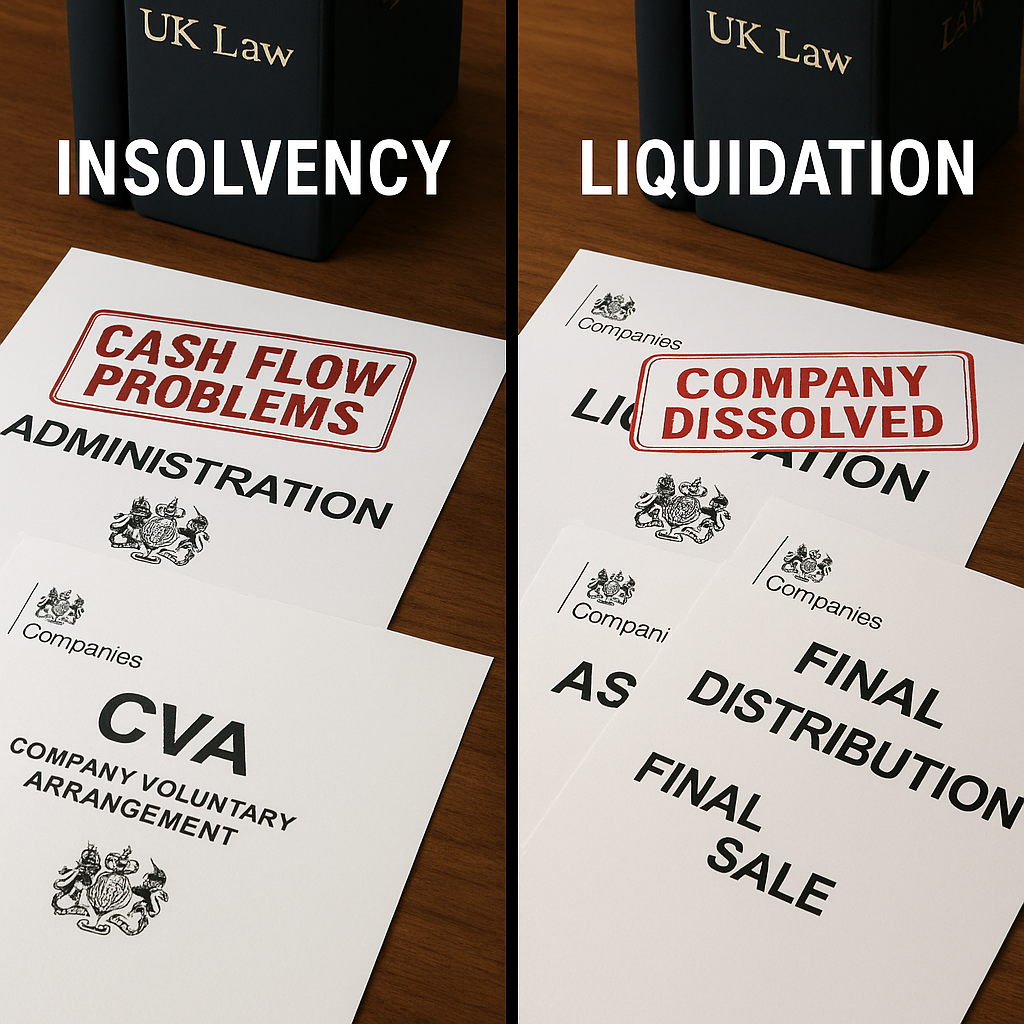
Difference Between Insolvency and Liquidation: Key Concepts
Insolvency is a financial state where a company cannot meet its debts as they fall due or where its liabilities exceed its assets. This status doesn't always lead to closing the business. An insolvency practitioner steps in to assess whether the company can survive through restructuring, entering administration, or pursuing a Company Voluntary Arrangement.
The process may involve negotiating with creditors and exploring various rescue mechanisms available before considering liquidation as a final option.
Liquidation marks the end of a company's journey, initiated when recovery seems impossible or as part of an orderly shutdown via Members' Voluntary Liquidation (MVL) for solvent companies. A licensed insolvency practitioner transforms into a liquidator, taking control of all assets for selling and distributing funds amongst creditors and shareholders.
Contrary to insolvency, which might offer a pathway to recovery through various procedures, liquidation finalises the closure and distribution of assets, leading to the company's dissolution.
Understanding the Key Differences
A company faces insolvency when it can't pay its debts on time or when its liabilities exceed its assets. This situation may lead to liquidation, but the two are not the same. Insolvency is a financial state of being unable to cover owed amounts, whilst liquidation refers to the process of closing down a company and distributing its assets to creditors.
Liquidation might be voluntary or compulsory and may occur as an outcome of insolvency, but it can also happen to solvent companies for strategic reasons.
Insolvency is about financial inability, whereas liquidation means ending the company's existence. The interaction between insolvency and administration reveals crucial paths for addressing financial difficulties without necessarily leading to liquidation.
Understanding these differences helps directors decide how best to proceed during difficult times. A licensed insolvency practitioner's role becomes critical here; they guide companies through either recovery options or winding up processes based on their condition.
How Insolvency and Liquidation Interact
Insolvency can lead to liquidation, marking a critical phase in a company's lifecycle. Insolvency occurs when a firm cannot pay its debts on time or when liabilities surpass assets under either the cash flow or balance sheet tests.
This situation often prompts directors to seek advice from an insolvency practitioner. The practitioner assesses the company's viability and may recommend liquidation as the path forward if recovery seems unlikely through other means.
During liquidation of an insolvent company, the assets get sold off to repay creditors according to the statutory order of priority. The appointed liquidator takes control, shutting down operations and distributing proceeds from asset sales according to legal requirements.
Liquidation signifies the end of a business directly stemming from insolvency events. It ensures that creditors recover as much as possible whilst legally dissolving the company.
Implications for Creditors and Shareholders
Creditors face significant risks during insolvency and liquidation processes. They might not recover all the money owed to them, particularly unsecured creditors who rank lower in the statutory order of priority. This situation becomes more challenging if a company enters compulsory liquidation, as this method prioritises clearing secured debts and the costs of liquidation first.
Unsecured creditors, such as suppliers or utility providers, often receive only a fraction of what they are due, if anything at all. The Insolvency Act 1986 sets out the order in which creditors are paid, with secured creditors having the best chance of recovery.
Shareholders also find themselves in a difficult position when a company faces insolvency or decides to liquidate. In voluntary liquidation scenarios like Members' Voluntary Liquidation (MVL), shareholders may see some return from the distribution of assets after all debts have been settled.
However, in situations where the company's liabilities exceed its assets, shareholders are likely to receive nothing, reflecting their position as the last in line for any form of financial distribution during the winding-up process.
When is a Company Insolvent?
A company becomes insolvent when it cannot pay its debts as they fall due, known as cash flow insolvency. This state may also occur if the business's liabilities exceed its assets, indicating balance sheet insolvency under the tests established by the Insolvency Act 1986.
Directors must assess their company's financial health to avoid trading whilst insolvent, which can lead to severe legal consequences including personal liability for wrongful trading.
Determining if a company is unable to continue operations involves close examination of its cash flows and liabilities. If a company delays payments consistently or receives legal warnings from creditors, these are strong indicators of insolvency.
A licensed insolvency practitioner should be consulted in such cases to review the situation and recommend a course of action, potentially including liquidation, administration, or a Company Voluntary Arrangement.
Indicators that a Company Cannot Pay its Debts
Recognising when a company is unable to fulfil its debts is vital for business proprietors, company directors, and financial professionals. Understanding the early symptoms can prevent further financial harm and potential director liability.
Frequent delays in paying creditors highlight a company's struggle with cash flow, hinting at possible insolvency. Creditors send formal demands for payment, such as statutory demands, signifying severe liquidity problems.
The company faces overdraft limits being consistently hit or exceeded, demonstrating dependence on bank support without sufficient incoming revenues. Legal proceedings initiated against the company for nonpayment of debts demonstrate a failure to fulfil financial obligations.
Suppliers commence demanding cash on delivery (COD), rejecting credit terms due to previous payment failures. Business leaders implement personal assets to support the enterprise; this is generally a desperate measure signifying intense financial distress.
The rapid decline in cash reserves without matching revenue generation emphasises unhealthy financial conditions. Regular adverse commentary from balance sheet evaluations where liabilities exceed assets indicates insolvency risk.
The difficulty of paying staff wages punctually proves that the company's liquidity is weakened. Frequently requesting extensions on debt repayments displays an incapability to fulfil original contracts.
These symptoms necessitate prompt consideration and action from management to address potential insolvency issues before considering liquidation as an alternative.
Legal Consequences of Being Insolvent
Facing insolvency brings about significant legal consequences that can impact a company's future operations and its directors personally. Directors must be aware of their responsibilities to avoid wrongful trading, which can lead to personal liability for company debts.
Upon declaring insolvency, the directors may lose control over the company's assets and affairs; these are then handed over to an appointed insolvency practitioner. This shift marks a critical change, as the practitioner aims to settle debts by selling off assets.
Insolvency doesn't just threaten a company's survival; it fundamentally changes who has control and decision-making authority.
Creditors too face repercussions during this period. They may receive only partial payments or sometimes none at all, depending on how the assets are distributed according to the statutory order of priority.
Insolvency proceedings also open up the company's affairs for scrutiny; ensuring compliance with financial obligations becomes paramount for directors seeking to mitigate legal risks associated with insolvency and potential liquidation scenarios.
What are the Different Types of Liquidation?
Liquidation marks a crucial turning point for any company, indicating the termination of its business operations by selling off assets to settle debts. This process is primarily categorised into two types: compulsory and voluntary liquidation.
In compulsory liquidation, a court mandates the dissolution of the company following a winding-up petition from creditors due to insolvent conditions. This form signifies a forced procedure where the company is unable to resolve its debts and the court intervenes.
On the contrary, voluntary liquidation occurs when the directors or shareholders elect to shut down a solvent company (Members' Voluntary Liquidation - MVL) or an insolvent company (Creditors' Voluntary Liquidation - CVL).
An MVL facilitates the distribution of surplus assets to shareholders after all debts have been cleared, indicating a financially sound winding-up with potential tax advantages. Conversely, CVL caters to instances where the company is incapable of meeting its liabilities, providing an orderly method for winding up under insolvency situations.
Exploring Members' Voluntary Liquidation (MVL)
Members' Voluntary Liquidation (MVL) is a form of liquidation for solvent companies. Directors must make a statutory declaration of solvency, confirming the company can pay its debts in full within 12 months of the commencement of winding up.
This process allows shareholders to realise their assets efficiently and often provides significant tax advantages, particularly for capital gains tax and entrepreneurs' relief.
An MVL often marks the end of a successful company's journey when it has served its purpose, the owners decide to retire, or there's a need to extract accumulated profits in a tax-efficient manner. The process is entirely voluntary and controlled by the shareholders.
The role of an insolvency practitioner becomes crucial here, as they oversee the liquidation process ensuring all legal requirements are met. They work on distributing assets to shareholders after paying off any debts and dealing with all regulatory requirements.
Understanding Creditors' Voluntary Liquidation (CVL)
Initiation of Creditors' Voluntary Liquidation (CVL) occurs when company directors determine the business is unable to fulfil its debt liabilities and cannot make a declaration of solvency. Their course of action is to liquidate voluntarily, with the intention of settling as many debts as possible.
A qualified insolvency practitioner is appointed to oversee this process. This involves evaluating the company's assets before selling them through the most appropriate method to maximise realisations. The proceeds from these sales are utilised to repay the company's creditors according to the statutory order of priority.
In a CVL, priority is given to secured creditors, followed by preferential creditors including employees for certain claims such as wages and holiday pay. Remaining funds are distributed amongst unsecured creditors, such as suppliers or HM Revenue & Customs.
By closely monitoring cash flow and the level of debts, this stage may be avoided through early intervention. Yet, if liquidation is unavoidable, prompt action through CVL can help limit the impact for all parties involved.
Conclusion
Understanding the distinctions between insolvency and liquidation is essential for business owners, company directors, and financial professionals. Insolvency represents a condition where a company is unable to pay its debts, possibly leading to various legal paths including administration, Company Voluntary Arrangements, or liquidation.
Conversely, liquidation indicates the completion of a company's journey by selling off assets to pay creditors and ultimately dissolving the company. This distinction is crucial because it affects the decision-making processes and outcomes for all stakeholders involved.
For those managing limited companies or handling financial strategies, understanding these differences ensures informed decisions are made during times of economic distress. The engagement of insolvency practitioners or liquidators might be essential to manage such situations effectively, underlining the significance of professional guidance in handling financial difficulties within businesses.
Early recognition of financial problems and prompt professional advice can often provide more options for resolution, whether through rescue mechanisms or orderly liquidation procedures that maximise returns for creditors and minimise personal liability for directors.
Facing financial struggles can feel overwhelming for business owners and company directors, leaving you searching for ways to stabilise operations and chart a clearer course ahead.
In such challenging times, understanding the role of insolvency practitioners is essential. These professionals play a crucial part in addressing financial difficulties—especially when helping companies navigate solvent versus insolvent liquidation scenarios—and guiding businesses through tough circumstances.
A key requirement is that licensed insolvency practitioners must pass examinations administered by the Joint Insolvency Examination Board. This article explores how these specialists can support your business during financial crises.
We will examine their core responsibilities, how to find the right insolvency practitioner, and when it's time to seek their advice.
Why is an Insolvency Practitioner Needed?
To delve deeper into the role of an Insolvency Practitioner (IP), it is important to understand their significance in financial distress situations. An Insolvency Practitioner is a licensed professional authorised to handle insolvency cases.
This includes acting as a liquidator when a company undergoes liquidation, taking on the role of an administrator in the administration process, and assisting with procedures such as Company Voluntary Arrangements (CVAs) and Individual Voluntary Arrangements (IVAs).
Their core responsibility is to guide businesses and individuals facing insolvency by working to either rescue the business or, when that's not possible, maximising returns for creditors.
Insolvency Practitioners must be accredited by recognised institutions like ACCA or the IPA. They work within insolvency laws, ensuring compliance and equitable outcomes. With expertise in personal and corporate insolvency, IPs manage formal processes and prevent further financial instability, protecting both the company and creditors.
How do we define an Insolvency Practitioner?
An insolvency practitioner is a qualified professional authorised to manage the affairs of an insolvent individual or company. They play a vital role in navigating formal insolvency proceedings such as bankruptcy, administration, and voluntary arrangements.
The practitioner's primary objective is to either rescue the business, liquidate its assets to benefit creditors, or negotiate a settlement.
To carry out their duties, insolvency practitioners must be licensed by an official body, such as the Insolvency Service, ensuring they meet rigorous standards and possess the expertise to manage intricate financial issues.
Insolvency practitioners guide companies through financial difficulties, offering corporate insolvency solutions like restructuring or liquidation. They are regulated to ensure ethical practices and legal compliance, protecting both businesses and creditors.
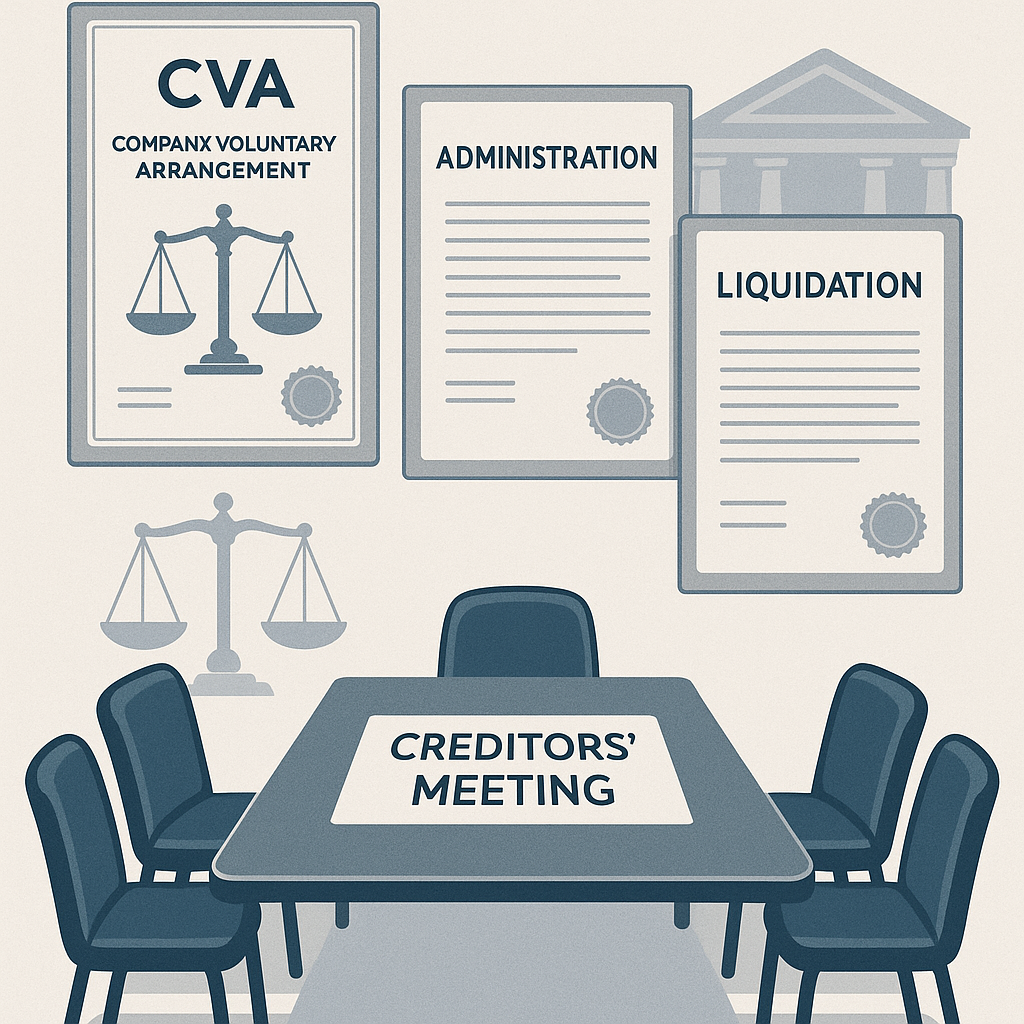
The Insolvency Practitioner's Role in Financial Distress
Insolvency practitioners bear a vital part in managing the financial strain within firms. They provide insolvency advice and shoulder the responsibility of the formal insolvency process such as administration, company voluntary agreements, and liquidation.
Their expertise assists companies in managing complex financial scenarios by evaluating the company's viability and devising ways to recover debts or reorganise finances.
These licensed professionals work closely with creditors, shareholders, and directors to ensure a fair and transparent insolvency process. They aim to optimise returns for creditors whilst also trying to salvage the business if feasible.
In cases where recovery is impossible, insolvency practitioners oversee the orderly winding up of a company, ensuring legal obligations are met. Costs vary based on the case complexity and process type, and are usually paid from company assets. Businesses should understand these fees for financial planning.
How Insolvency Practitioners Operate
Insolvency practitioners play a crucial role in resolving companies' financial distress. They take insolvency appointments to assess the situation thoroughly. These professional insolvency practitioners work closely with all parties involved - including creditors, debtors, and company directors.
Their main goal is to find a viable solution that serves everyone's best interests.
They offer insolvency advice based on the specific circumstances of each case. This might involve formal insolvency procedures such as administration or voluntary arrangements. Throughout the process, they aim to maximise returns for creditors whilst trying to save the business if possible.
A regulated insolvency practitioner acts as a neutral party to balance the needs of all stakeholders during financial difficulties.
How to Find an Insolvency Practitioner
Identifying the right insolvency practitioner is crucial for companies facing financial hurdles. Your choice can greatly impact your business's future and ability to navigate insolvency.
- Initiate your search by studying local insolvency practitioners. Identify those based in your vicinity with a reliable reputation in aiding businesses during fiscal distress.
- Review the credentials of potential practitioners. Confirm they are authorised by the Insolvency Service to accept insolvency appointments.
- Access websites of professional bodies such as the Insolvency Practitioners Association (IPA). These sites register certified and credible insolvency specialists.
- Scrutinise reviews and solicit suggestions. Engage with colleagues in your field or financial consultants who have interacted with insolvency practitioners.
- Converse with multiple firms to discuss your circumstances. This preliminary chat can offer an understanding of their potential approach to your situation.
- Enquire about their familiarity with businesses akin to yours. An insolvency practitioner with experience in your field may provide more pertinent counsel.
- Enquire about a detailed explanation of the involved expenses. Foreknowledge of their service charges aids in planning for insolvency procedures.
- Assess their strategy and proposed solutions during advisory sessions. Choose an insolvency practitioner who exhibits a forthright and empathetic attitude towards your company's crisis.
- Investigate their success ratio in circumventing company liquidation or securing constructive results through official insolvency procedures, including administration and voluntary company arrangements.
- Gauge your comfort level in discussing private fiscal details with them, as a sense of security is essential in this professional connection.
Opting for a seasoned and understanding professional will offer not only legal fulfilment but also strategic counsel to traverse through challenging periods fruitfully.
Steps to Find an Insolvency Practitioner
Finding the right insolvency practitioner is crucial for business owners, company directors, and financial professionals facing financial distress. It ensures that they receive expert guidance throughout the insolvency process.
- Start with research online to identify a list of licensed insolvency practitioners.
- Check each practitioner's qualifications to make sure the Insolvency Service authorises them.
- Read reviews and testimonials from previous clients to gauge their reputation.
- Contact several insolvency firms to discuss your situation and get an idea of their approach.
- Ask about the cost of insolvency service to understand how it affects your budget.
- Confirm they have experience in handling cases similar to yours, ensuring they're suited to your specific needs.
- Ensure the practitioner is licensed and regulated, offering you peace of mind regarding their professionalism and ethics.
- Consider the location of the insolvency practitioner; sometimes, a local professional might offer more convenience.
- Enquire about the range of services they offer, as some situations may require additional support, such as restructuring advice or administration procedures.
- Schedule a meeting or a call with your top choices to assess their communication skills and compatibility with your business values.
These steps will guide you in selecting an insolvency expert who can navigate through challenging financial times effectively.
Choosing the Right Professional for Your Needs
Selecting a reputable insolvency practitioner is crucial for aptly managing your company's financial distress. Search for a licensed and regulated professional with the right qualifications and experience to guide you through the insolvency process.
Evaluate their past experiences in dealing with parallel situations to gain trust in their capability to provide personalised advice tailored specifically for your business.
Contemplate services provided by local insolvency practitioners regulated by professional bodies based on your specific circumstances. Some might be experts in administration or receivership, whilst others could focus more on voluntary arrangements.
Evaluating their past performance can give insight into how they might manage your situation, enabling a decision that aligns with the future of your business.
Importance of a Licensed Insolvency Practitioner
Choosing a suitable professional leads directly to understanding why opting for a licensed insolvency practitioner is crucial. These insolvency practitioners hold a licence to take insolvency appointments, ensuring they comply with the Insolvency Act's stringent standards.
They provide peace of mind that your company's financial distress is in capable hands. Licensed by the insolvency authorities, these experts bring legitimacy and expertise to managing your business's potential recovery or orderly closure.
A licensed insolvency practitioner plays a vital role in safeguarding interests across the board from creditors and shareholders to employees. By adhering to established regulations and ethical codes from professional bodies, they ensure that all legal obligations are met during the insolvency process.
Their oversight guarantees that actions taken are fair, maximising returns to creditors whilst protecting company directors from future legal complications related to wrongful trading or insolvent trading accusations.
When Do You Need an Insolvency Practitioner?
You may need to engage an insolvency practitioner if your company has difficulties meeting its debts. This could indicate potential insolvency. An insolvency practitioner can assist you in understanding formal insolvency procedures, including administration and voluntary arrangements.
They offer insolvency services tailored to aid companies in financial distress.
Engaging with an insolvency expert sooner can provide advantages such as identifying methods to prevent a total downfall. Insolvency practitioners are licensed professionals who analyse the company's financial status, work in conjunction with secured creditors, and guide directors through the insolvency process.
If you observe persistent cash flow issues or receive complaints from creditors, it's the right moment to seek counsel from a local insolvency practitioner.
Signs Your Company May Be Insolvent
Recognising early insolvency signs can help your company to avoid severe financial distress. Acting quickly upon spotting any of these indicators within your business is crucial.
- A consistent struggle in your company to settle bills punctually is a common indication of cash flow problems often observed in insolvency situations.
- Frequent creditor interactions regarding overdue payments demonstrate the inability of the company to meet its financial obligations promptly.
- Delayed or unpaid employee wages exhibit the magnitude of a company's insolvency predicament.
- Legal proceedings, such as winding-up petitions initiated against your business, signify an extreme financial predicament necessitating imminent intervention by an insolvency practitioner.
- Insistence from suppliers for upfront payment for goods evidences their wavering belief in the company's ability to pay on terms due to previous late payments.
- The company exhausting its overdraft facilities and creditors denying additional loan applications imply that lenders recognise considerable risk relating to your business.
- Financial documents showing continuous losses over several periods indicate operational costs outweighing income generated.
- A noticeable decline in sales income compared to previous years underscores potential market loss or declining demand for products/services.
- Directors resorting to personal savings to sustain the business emphasise urgency and highlight the immediate need for professional advice from accountants or insolvency experts.
- Main customers have begun to shift their business elsewhere due to their concerns about your company's capability to honour future contracts due to financial insecurity.
Proactively addressing early warning signs by consulting an insolvency practitioner online can help avoid mandatory liquidation. They may offer restructuring options like Administration or CVAs. Selling company assets could also improve liquidity and settle debts.
Understanding the Insolvency Process: Key Steps, and Legal Procedures
Identifying signs of insolvency leads directly to the critical step of understanding the insolvency process. The journey begins once a business or individual acknowledges financial distress.
An essential part of this process involves appointing a licensed insolvency practitioner. This expert navigates through insolvency proceedings, adhering strictly to the Insolvency Act 1986 and Statements of Insolvency Practice.
The role of an insolvency practitioner is to manage company assets, deal with creditors, and oversee any necessary legal action. Their work is highly regulated to ensure fairness and compliance with law.
Companies facing insolvency might enter into administration, liquidation, or company voluntary arrangements (CVAs), depending on their specific circumstances.
Benefits of Early Engagement with an Insolvency Expert
Gaining an understanding of the insolvency process lays the foundation for recognising why timely consultation with an insolvency practitioner can be pivotal. Early engagement with a licensed professional in the field of many insolvencies offers crucial advantages.
It allows businesses to explore all available restructuring and avoidance options before financial troubles become unmanageable. This proactive approach can save time, reduce the costs of insolvency, and preserve company value.
Consulting an insolvency expert early can provide strategic advice to avoid bankruptcy. A licensed review may identify underutilised company assets or inefficiencies, improving cash flow and solvency.
The Cost of Hiring an Insolvency Practitioner
The cost of hiring an insolvency practitioner can vary widely. This depends on the complexity of your financial issues and the nature of the insolvency proceedings you require. For many businesses, understanding these costs upfront is crucial for budgeting purposes.
Factors like the size of the company, amount of debt, and assets involved play a significant role in determining fees.
Insolvency firms often provide quotes based on their services' specifics needed for each case. These may include administration, preparing statements of insolvency practice, or supervising a protected trust deed among others.
Comparing costs across different firms and ensuring that your chosen insolvency practitioner holds a valid insolvency licence will help manage expenses effectively during this challenging time.
Factors Influencing the Cost of Services
Different aspects determine the rates of recruiting insolvency specialists. The intricacy of the insolvency procedure has a notable influence. More involved cases demand further time and expertise, resulting in elevated charges.
Moreover, your business's scale and formation directly affect the fees. A business possessing a larger size with numerous assets and creditors will likely incur higher costs due to the significant work required in managing its financial difficulties.
The selection of an insolvency resolution method also impacts the insolvency practitioner cost. For example, administration or company voluntary arrangements might need different levels of effort and expertise from an insolvency specialist compared to less complicated liquidation procedures.
Specialists modify their rates based on these aspects, along with any extra services such as asset assessment or creditor negotiation that your case might require.
Budgeting for Insolvency Proceedings: Planning, and Effective Strategies
Planning for the costs of insolvency proceedings is a crucial step for business owners and company directors. The price can vary depending on the nature of your situation and the insolvency services required from an insolvency practitioner.
Typically, fees relate to the complexity of work needed, such as asset evaluation, creditor negotiations, and legal filings in accordance with the Insolvency Act. It would help if you also considered additional expenses like court fees or charges for selling property.
To effectively budget for these proceedings, start by getting quotes from several licensed insolvency practitioners. Compare their fees alongside the scope of services they offer. It's essential to factor in both fixed costs and variable ones that might arise during the process.
This approach enables you to set aside a realistic fund that covers all potential expenses without straining your company's remaining resources too much.
The Role of an Insolvency Practitioner in Company Voluntary Arrangements
In a Company Voluntary Arrangement (CVA), an insolvency practitioner plays a crucial role. This professional assesses the company's financial situation to understand if a CVA is a viable option.
They work closely with company directors, guiding how to propose feasible repayment plans to creditors. The insolvency practitioner aims to devise arrangements that offer the best possible outcome for both the indebted company and its creditors.
As part of their duties, they also liaise with all involved parties, ensuring clear communication throughout the process.
Once stakeholders accept a CVA proposal, the insolvency practitioner oversees its implementation. They act as a supervisor, monitoring compliance and managing payments from the company to its creditors according to agreed terms.
They ensure both parties adhere to the CVA terms, aiming for business recovery and creditor satisfaction. Through planning and negotiation, they help companies avoid liquidation, preserve jobs, and ensure sustainable operations.
Understanding Company Voluntary Arrangements
Company Voluntary Arrangements (CVAs) offer a flexible approach for businesses facing financial difficulties to repay their debts over time. An insolvency practitioner works closely with the company to agree on a manageable plan with creditors.
This arrangement allows companies to continue operating whilst addressing their financial obligations, providing a vital lifeline during tough times. The role of the insolvency practitioner here is crucial; they assess the company's situation, propose the CVA to creditors, and oversee its implementation once approved.
Such arrangements can also positively impact creditors and company directors by offering a structured repayment method rather than facing potential losses in case of liquidation.
How an Insolvency Practitioner Facilitates Arrangements
An insolvency practitioner steps in to manage a company's voluntary arrangement. They work closely with the business to create a plan that allows it to continue operating whilst repaying creditors over time.
This involves assessing the company's finances, identifying assets that can be used to support repayments, and setting up regular payments to creditors. Their goal is to find a balance that keeps the business running and satisfies creditor demands.
The process also includes negotiating with creditors, aiming for an agreement that reduces the overall debt burden without weakening the company. Insolvency practitioners use their knowledge of insolvency laws and financial strategies to convince creditors this approach is beneficial for both parties.
Conclusion
Understanding the impacts on creditors and company directors brings us to the significant role of insolvency practitioners in this intricate field. These licensed professionals have profound knowledge of the insolvency regime, ensuring every step is within the legal boundaries of administration law.
Their work surpasses mere advice; it expands to creating detailed reports for the insolvency department, making them essential in times of financial distress.
Choosing an experienced insolvency practitioner becomes vital when encountering financial difficulties. They direct you through each stage, whether it involves reaching out to an insolvency practitioner online or moving through voluntary arrangements with creditors.
Business owners and directors must realise early engagement with these experts can significantly alter their company's future path to a more financially secure position.
Managing a problematic business often prompts company directors to question, "What is the implication of liquidation?" This query frequently surfaces when alternative solutions appear scarce and financial tensions rise.
Liquidation signifies a crucial stage in a company's trajectory, marking the cessation of operations and the commencement of asset allocation.
Bear in mind liquidation does not always represent failure; for some enterprises, it's a strategy for resolving insolvency problems. Our blog provides insight into this intricate process.
We will assist you in understanding various forms of liquidation, what forces a company into this circumstance, and the procedure of asset management. Continue reading to gain more about effectively handling these difficult situations.
What does liquidation mean?
Moving from the broad strokes of company insolvency, we zone in on a crucial aspect: liquidation. Liquidation marks the process where a business or limited company ceases operations entirely, leading to the selling of its assets.
This step is vital for paying back creditors and distributing any remaining assets among shareholders or members. It's a path taken when a limited company can no longer meet its financial obligations; essentially, it's about winding up the affairs of the business in an orderly manner.
A licensed insolvency practitioner plays a pivotal role during this time. They oversee the entire liquidation process, ensuring that asset distribution happens fairly and lawfully among creditors and stakeholders.
The goal here is not just to settle debts but also to conclude the company's journey responsibly and ethically.
Liquidation doesn't just mean closing doors; it's about giving businesses a dignified closure while prioritising legal and financial responsibilities. Liquidation can also refer to the process of converting assets, such as inventory or investments, into cash, even when a business remains operational, often to improve liquidity or meet financial obligations.
Understanding the liquidation process
The initiation of the liquidation process occurs when a company has exhausted its means to fulfil financial commitments. Decision for such settlement is made by creditors or directors, having accurately analysed the company's situation.
The objective revolves around the liquidation of assets, settling creditors, and apportioning any residual funds to the shareholders. The mandate falls onto directors to assign a certified insolvency practitioner for supervision of this process.
This professional critically ensures the equitable valuation and market price sale of the company's assets.
Post-appointment, the company's control transitions from directors to the insolvency practitioner. The subsequent steps involve the identification, valuation, and anticipated sale of the company's assets.
The revenue generated from these transactions is prioritised firstly for secured creditors and then for unsecured creditors. In case of any surplus, shareholders are compensated according to the entitlements as per insolvency law.
Each step is planned and initiated strategically, enabling voluntary or compulsory liquidation proceedings to reduce losses and legal implications for the participants involved.
How company assets are handled
Company assets are subjected to a detailed procedure during liquidation. An accredited insolvency practitioner assumes responsibility for the company's assets. Following this, they appraise and dispose of these assets.
The proceeds generated from auctioning the company's assets are dedicated to settling any debts.
Any residual funds are distributed among shareholders, assuming any are remaining after addressing all creditors. This guarantees that the procedure is equitable and open for all participants.
Liquidating your limited company entails transmuting all business assets and resources into currency to reconcile outstanding liabilities.
Roles of a licensed insolvency practitioner
Certified insolvency practitioners hold an indispensable part in the process of liquidation. They handle the task of shutting down a company that is incapable of clearing its dues.
These professionals work with precision to certify that every legal and fiscal duty is fulfilled during a company's shutdown phase. Their responsibilities comprise selling company assets, distributing profits to creditors, and guiding directors through the intricate process of insolvency.
Our objective is to secure an optimal outcome for creditors and stakeholders.
They provide consultation on voluntary liquidation possibilities if a business decides it's best to halt operations prior to facing mandatory liquidation due to debt. Moreover, these experts manage discussions with creditors, aiming for settlements that accommodate all parties involved.
Their expertise guarantees companies adhere to the insolvency law accurately, shielding directors from accusations of wrongful trading and potential personal liabilities.
How does a company go into liquidation?
The commencement of liquidation occurs when a company is unable to settle its debts, necessitating the cessation of operations. This procedure guarantees that all of the company's holdings and assets are sold off to repay creditors.
Company directors convene a meeting to analyse the company's financial situation and determine if liquidation is required.
In the case of agreeing to liquidation, the next step is to appoint a certified insolvency practitioner to supervise the procedure.
The selected practitioner investigates the company's accounts to validate insolvency.
If the company's debts remain unsettled, company directors must then declare insolvency at Companies House.
Following this, the insolvency practitioner is responsible for holding a meeting with the creditors, informing them of the proposed liquidation.
Creditors are then given the opportunity to vote on the acceptance of the liquidation scheme.
Upon agreement, the insolvency practitioner assumes responsibility for the company's assets.
The company's assets are then evaluated and sold for cash.
The proceeds raised from selling assets are used for the purpose of settling the creditors, following a predefined order of priority.
After settling as much debt as achievable, any remaining debts are eliminated unless personal guarantees protect them from the directors.
Ultimately, the official closure of the company is marked by Companies House removing the company from its register.
This process ensures fair treatment and compliance with the practical law while liquidating a company's assets and settling its debts.
Steps to liquidate a company
Liquidating a company is a significant step that involves the process of closing down a business and distributing its assets. Business owners, company directors, and financial professionals must understand each stage of this process.
Assess the company's financial position. This entails an in-depth review of the company's liabilities, assets, and cash flow to determine if liquidation is the best course of action.
Seek advice from a licensed insolvency practitioner. These professionals guide you through the liquidation process, ensuring compliance with insolvency law.
Pass a resolution for liquidation. Directors must organise a meeting to vote on placing the company into liquidation.
Notify creditors about the decision to liquidate. The company must inform all its creditors about its plans to wind up the business.
Appoint an official liquidator. A licensed practitioner takes control of the company at this stage.
Liquidate assets of the company. The appointed practitioner values and sells off the company's assets to raise funds. Inventory usually at steep discounts to expedite the liquidation process and maximise returns to creditors.
Settle outstanding debts with creditors from the liquidation proceeds in order of priority, as outlined in insolvency law.
Distribute any remaining funds to shareholders after all debts and expenses have been paid.
File necessary paperwork with Companies House indicating that the company has gone into liquidation and has ceased trading.
Finally, remove or strike off the company's name from the companies register at Companies House once all aspects of the liquidation are complete.
This structured approach ensures that a liquidated company meets its legal obligations, minimises wrongful trading risks, and provides clarity on distributing assets during the liquidation process.
Reasons a company may face liquidation
After discussing the steps to dissolve a company, it's critical to comprehend why a business might arrive at this juncture. Liquidation can occur on numerous grounds, indicating a company's cessation.
Ongoing losses - If a firm continually loses money, it might deplete its resources. This circumstance makes it challenging to keep the business operational.
Cash flow issues - Even thriving firms might face liquidation if they fail to handle their cash flow effectively. It implies they lack sufficient liquid assets to meet immediate obligations.
Unsettled debts - Accumulated debts that the company cannot repay usually push companies into insolvent liquidation.
Legal challenges - Lawsuits or legal disputes may deplete a company's resources, driving them to closure.
Loss of crucial clients - Over dependence on a handful of clients can be risky. If these customers depart, it might compel the company into liquidation.
Market alterations - A substantial shift in market demand or technology may render a business model outdated.
Failure to secure funding - Firms may require more funding for expansion or survival. An inability to acquire this can cause insolvency.
Director conflicts - Internal discord among directors might obstruct decision-making procedures, leading to harmful financial decisions or halting progress altogether.
Every one of these aspects strains the liquidity and operational feasibility of a business, possibly leading to its liquidation as a means to settle debts and officially terminate.
What company directors need to know
Company directors play a crucial role in the liquidation process. They must ensure that they place the company into liquidation correctly if it becomes insolvent. This action is vital to protect themselves from accusations of wrongful trading and to safeguard the interests of creditors.
Directors should be fully aware that once a company is placed into liquidation, their powers cease, and a licensed insolvency practitioner takes over the management of the company's affairs.
The decision to wind up a company is never easy, but understanding your responsibilities can smooth the path.
They also have legal duties to cooperate with the authorised practitioner and provide all necessary documents related to the company's finances. Failing to comply can lead to severe consequences, including personal liability for company debts.
Knowing about Members' Voluntary Liquidation, Creditors' Voluntary Liquidation, and compulsory liquidation gives directors options based on whether their company is solvent or insolvent.
What are the different types of liquidation?
The liquidation process encompasses several forms, primarily categorised into Members' Voluntary Liquidation and compulsory liquidation. A company's directors initiate voluntary liquidation either due to insolvency or as a strategic approach for solvent companies.
Conversely, compulsory liquidation is imposed on a business by its creditors via court orders when it's unable to settle its debts. This section offers a clear liquidation and winding up comparison, helping business owners understand the key differences and implications of each path.
These processes further break down into essential categories like solvent liquidation and insolvent liquidation. Solvent liquidation offers a graceful exit strategy for financially stable businesses, allowing for the distribution of the company's remaining liquid assets among shareholders after all debts are settled.
Insolvent liquidation, conversely, is relevant for companies unable to fulfil financial obligations; assets are liquidated to repay creditors to the fullest extent possible. Each liquidation type carries implications regarding asset handling and the influence it has on a director's future decisions within business operations.
Voluntary liquidation vs. compulsory liquidation
Voluntary liquidation transpires when a firm's directors opt to discontinue its operations as the firm can no longer fulfil its financial dues. They elect to initiate the liquidation process, usually intending to settle debts with creditors systematically.
This choice is made autonomously, without outside influences from creditors or legal directives. It indicates the firm's active steps in managing its insolvency under monitored conditions.
Contrarily, compulsory liquidation happens when an insolvent firm's creditor applies for winding up on behalf of the business, compelling it into liquidation through a court directive.
This method of business liquidation develops not from preference but as an aftermath of lawful proceedings by creditors striving to recoup the funds owed to them. The court determines that the firm must be dissolved so that assets can be liquidated to settle debts.
Firms facing compulsory liquidation forfeit authority over their assets and have a lesser influence on the conclusion of their matters compared to voluntary liquidation situations.
Understanding solvent liquidation and insolvent liquidation
Solvent liquidation occurs when a company can pay its debts and decides to close in an orderly fashion. This process allows the business to clear its liabilities, distribute any surplus assets among shareholders, and then wind up the company officially.
Directors may choose this route for various reasons, such as retirement or restructuring purposes. It often results in a more positive outcome for all parties involved.
In contrast, insolvent liquidation takes place when a company is unable to meet its financial obligations and must cease operations. The main aim here is to sell off assets of the business to pay creditors and shareholders back as much as possible.
The appointed insolvency practitioner plays a crucial role in managing this process efficiently, ensuring that the distribution of proceeds happens fairly according to legal hierarchies.
This type of liquidation highlights the challenges faced by businesses in financial distress, offering business rescue through structured dissolution.
What is the cost of company liquidation?
Determining the cost of putting a company into liquidation depends on various factors. These factors include the size of the company, the complexity of its liabilities, and whether it is a voluntary or compulsory process.
For businesses considering this step, understanding these costs is crucial. Typically, voluntary liquidation appears less costly than being forced into compulsory liquidation by creditors.
This is because, in a compulsory scenario, additional legal fees can accumulate quickly.
The role and choice of a licensed insolvency practitioner also play critical roles in managing expenses during the company liquidation process. Their fees vary significantly based on the assets available for sale and how complex it is to close down the business operations.
Directors should budget carefully for these services to prevent unexpected charges that may affect personal finances, particularly in cases where directors' liability is involved in company liquidation proceedings.
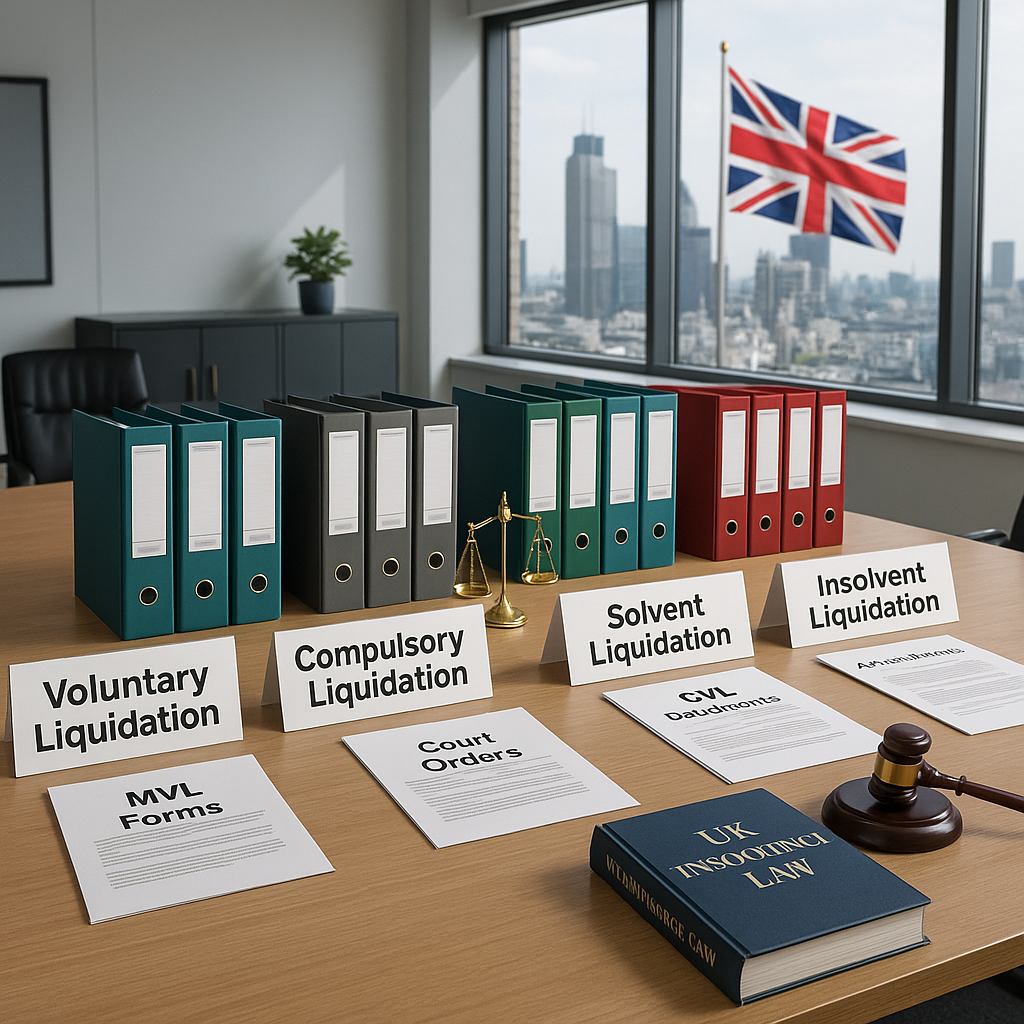
Factors affecting liquidation cost
The cost of liquidation can vary widely depending on several factors. These elements influence how much a company will need to spend to close down properly.
Size of the company: Larger companies often have more assets and debts, which can make the company liquidation process more complex and costly.
Type of liquidation: Voluntary liquidation is usually less expensive than compulsory liquidation, as it involves fewer legal proceedings.
Amount of debt: Companies with significant debts may face higher costs due to the need for detailed debt analysis and negotiations with creditors.
Nature of assets: The value and type of a company's assets affect how easily they can be sold off. High-value or specialised assets might require an expert appraisal, increasing costs.
Legal fees: The involvement of solicitors to manage legal issues, paperwork, and court filings adds to the expenses.
Fees for insolvency practitioners: Licensed practitioners charge for managing the liquidation process, with costs varying based on the complexity of the case.
Costs related to staff redundancy: If a company has employees, there may be statutory redundancy payments that need to be made.
Each factor plays a crucial role in determining the overall financial impact of closing down a business through liquidation.
Managing expenses during the liquidation process
Cutting costs is crucial during the liquidation of a company. Directors should work closely with a licensed insolvency practitioner to identify ways to reduce expenses. This might include halting all non-essential spending and negotiating better terms with suppliers.
Selling off assets efficiently also helps manage the financial strain.
Directors must prioritise payments, especially taxes and wages, to stay compliant with legal obligations. Keeping communication open with creditors can lead to agreements that ease the financial pressure on the business in its final stages.
Impact on insolvent companies and their creditors
After assets of the company are valued and sold, the process significantly impacts insolvent companies and their creditors. For insolvent companies, liquidation means they must cease operations permanently.
This step allows them to address outstanding liabilities by distributing the proceeds from sold assets to their creditors. Creditors of an insolvent company face a challenging time as well.
They often receive payments on a priority basis determined by the law. Usually, secured creditors stand first in line, followed by unsecured ones. Both parties must understand where they stand in this hierarchy to manage expectations about recovery rates accurately.
Conclusion
Liquidation marks a critical phase for any business, signalling the end of its operations. For company directors and financial professionals, understanding this process is key. Liquidation may be voluntary or compulsory but always aims at paying off liabilities by selling company assets.
Those in charge must be well aware of their roles and responsibilities during this period.
The cost of liquidation varies and is influenced by several factors, including the size of the company and its financial standing prior to liquidation. Directors must navigate these costs carefully to minimise the impact on stakeholders.
Meanwhile, distributing the assets to claimants also requires strict adherence to priority rules, ensuring creditors receive what they are due. This process underlines the importance of thorough preparation and professional guidance throughout liquidation.

Address: Apex Building, 1 Water Vole Way, Balby, Doncaster, South Yorkshire, DN4 5JP
Tel: 01302 430180
Services
Company


